
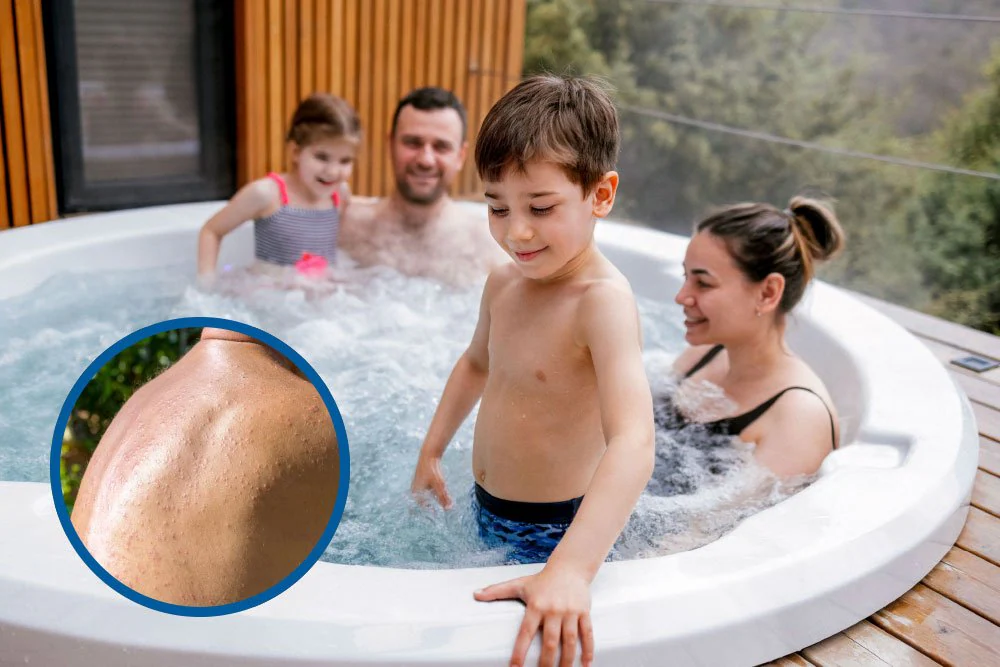
Nothing spoils hot tub relaxation like an itchy, red rash afterward. Known as hot tub folliculitis, this condition is usually caused by Pseudomonas aeruginosa—a bacteria that thrives in poorly sanitized water. Here’s how to treat and prevent it, using the right mix of hot tub chemicals and maintenance.
-
**Sanitizer First: Chlorine or Bromine**
The most critical defense against bacteria is maintaining sanitizer levels. Keep chlorine between 3–5 ppm or bromine between 4–6 ppm to keep pathogens in check.
-
**Shock the Water Regularly**
Shocking your hot tub—adding a higher dose of oxidizer—helps break down organic contaminants like sweat, lotion, and skin oils. Use a non-chlorine shock weekly or after heavy use.
-
**Balance pH and Alkalinity**
Sanitizers work best when your water chemistry is in balance. Aim for a pH of 7.4–7.6 and total alkalinity between 80–120 ppm.
-
**Clean or Replace Your Filters**
Filters are a magnet for bacteria. Rinse them weekly, deep-clean monthly, and replace as needed (typically every 12–18 months).
-
**Drain and Refill Every 3–4 Months**
Even with perfect maintenance, spa water eventually gets saturated with dissolved solids and loses effectiveness. Regular draining is key.
-
**Additional Chemical Helpers**
Consider adding an enzyme-based water clarifier or a silver ion sanitizer system for an extra layer of protection.
**A Winnipeg-Specific Tip**
In Manitoba’s climate, hot tub usage spikes during both the peak summer and deep winter months. These swings in use require seasonal adjustment in your maintenance routine.
At LCL Spas, we provide a large variety of chemical options to help you stay on top of your water care, so hot tub rash will be one less thing to worry about. It’s your spa—make sure it stays clean, safe, and fun for every soak.